Ride or Die, Tag or Try: Inside the Crew Culture That Raised a Generation of Writers

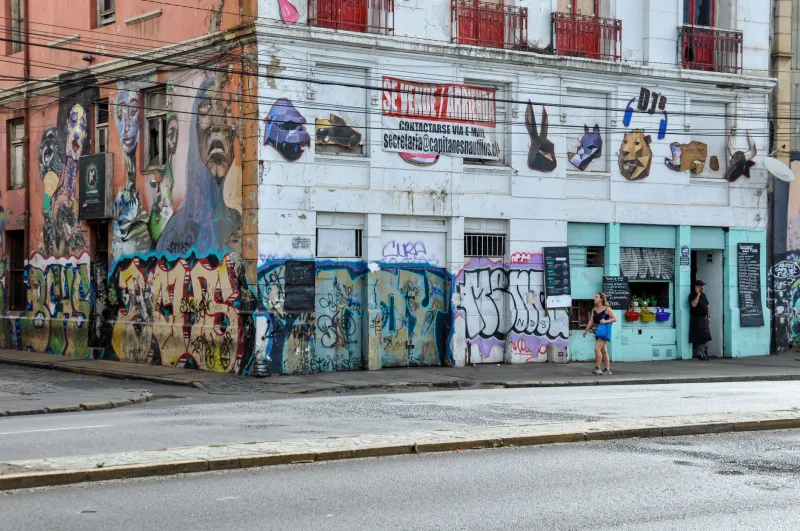
There's a version of the graffiti crew that lives in the public imagination like a bad movie — hooded figures, territorial beefs, spray cans rattling in the dark. That version isn't entirely fiction. But it's maybe a quarter of the picture. The rest of it looks a lot more like family.
Across American cities, graffiti crews have quietly functioned as some of the most durable social structures in urban life. Not institutions. Not nonprofits with grant funding and mission statements. Just people, bound by paint and proximity and a shared language that the outside world never quite learned to read.
This is about that other story.
What a Crew Actually Is
Ask ten writers to define a crew and you'll get ten different answers. Some will talk about style compatibility — the way certain letter forms just click together on a wall. Others will get philosophical about trust. A few will shrug and say it's just the people who show up.
But spend enough time around crew culture and a clearer picture emerges. A crew is, at its core, a container for belonging. It's a place where your tag means something beyond your own name, where your reputation travels with a collective weight behind it, and where someone has your back in ways both literal and otherwise.
Manny, a 44-year-old writer from Chicago's South Side who has been down with the same crew since he was fifteen, puts it plainly: "My crew was the first place I ever felt like what I did mattered. Not just the pieces — me. They saw something in me before I saw it in myself."
That kind of testimony comes up again and again when you talk to long-standing crew members. The art is the entry point, but the staying power is relational.
The Architecture of Loyalty
Crew culture runs on unwritten codes, and those codes are remarkably consistent across cities and generations. You don't snitch. You share paint when someone's broke. You show up to paint, yeah, but you also show up when someone's mom is sick or when someone catches a charge and needs a character witness who won't fold under pressure.
In Los Angeles, where crews like K2S and AWR built reputations that stretched from the freeway walls of the 101 to international graffiti magazines, the crew structure often mirrored extended family dynamics more than any gang or club model. Writers took on mentorship roles organically — older heads passing down technique, street knowledge, and the kind of judgment that keeps you from making moves that get you hurt or locked up.
"You learn to read a situation," says Dresk, a veteran LA writer who has been active since the early nineties. "Not just walls — people, neighborhoods, risk. Older writers in my crew taught me that. They didn't have to. They just did, because that's what you do."
In New York, where modern graffiti culture was essentially invented, crew lineage carries almost ancestral weight. Knowing who mentored whom, which crew absorbed another after a key member passed, which writers carried a name forward after others aged out — these histories are oral traditions, passed down with the same care you'd give a family recipe.
When Beef Becomes Brotherhood
It would be dishonest to skip past the conflict. Crew rivalries have been real, sometimes dangerous, and occasionally tragic. Territorial disputes over walls, cap-overs that escalate, reputations that collide — graffiti culture has never been entirely peaceful, and anyone who tells you otherwise is selling something.
But what's fascinating, and what gets underreported, is how often those rivalries resolve into something unexpected. Writers who beefed hard in their twenties will tell you, with genuine warmth, about how they eventually linked up, painted together, and built something lasting. The shared language of the culture — the mutual respect for a technically clean piece, the acknowledgment of someone's dedication to the craft — creates a basis for reconciliation that transcends whatever original slight started the drama.
In Chicago, a city where street tensions can calcify into years-long conflict, several long-running crews have deliberately cultivated what one writer described as a "no politics at the wall" ethic. The wall is neutral ground. What happens there is between writers and the surface.
"You see someone's technique up close, see how they hold the can, how they plan their letters — that's intimate," says Lucia, a Chicago writer and one of the few women who's been consistently active in her city's scene for over two decades. "It's hard to stay enemies with someone after you've painted next to them all night."
The Youth Pipeline Nobody Talks About
Perhaps the most underacknowledged function of crew culture is its role in mentoring young people who, for whatever reason, don't connect with conventional support structures. Schools, churches, rec centers — these all serve important functions, but they don't reach everyone. Crews often do.
Young writers who find their way into established crews frequently describe the experience as transformative in ways that go well beyond graffiti. They learn discipline — because good lettering requires it. They learn accountability — because your crew's reputation is connected to your behavior. They learn that skill is built, not given, and that the person next to you has something to teach if you're humble enough to watch.
In cities with active graffiti communities, it's not uncommon to find writers in their thirties and forties who credit their crew with keeping them out of trajectories that claimed people they grew up alongside. That's not a small thing. That's the kind of social work that doesn't get a plaque or a press release.
Still Writing, Still Here
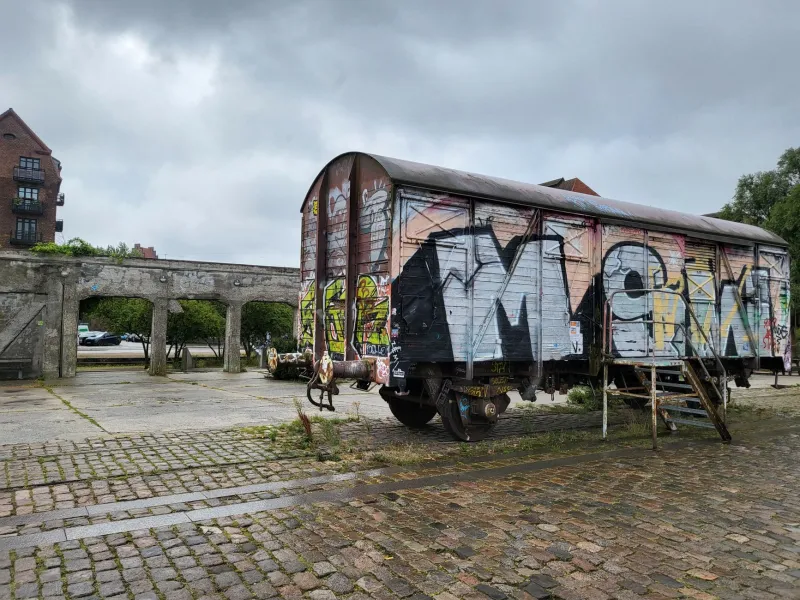
What keeps writers in their crews for decades isn't nostalgia, exactly. It's something more like investment. You put years into a collective identity, into relationships forged at 2 AM on a freight yard or a rooftop, and those years accumulate into something real.
The walls change. Cities paint over what they don't want to see. Writers age, move, have kids, get jobs that make midnight missions harder to justify. But the crews persist, adapting without dissolving. Some pivot toward legal murals and commissioned work. Others maintain their underground practice alongside more visible careers. A few become institutions in their own right, hosting events, publishing zines, connecting new writers to older ones.
The through-line is always the people. The paint is just how they found each other.
"Thirty years in," Manny says, "and I still get a text from someone in my crew every single day. We don't always talk about graffiti. Sometimes we just talk. That's the whole point, you know? The walls got us in the door. The people made us stay."