Paint, Pride, and Place: Ten American Murals That Became the Soul of Their Streets
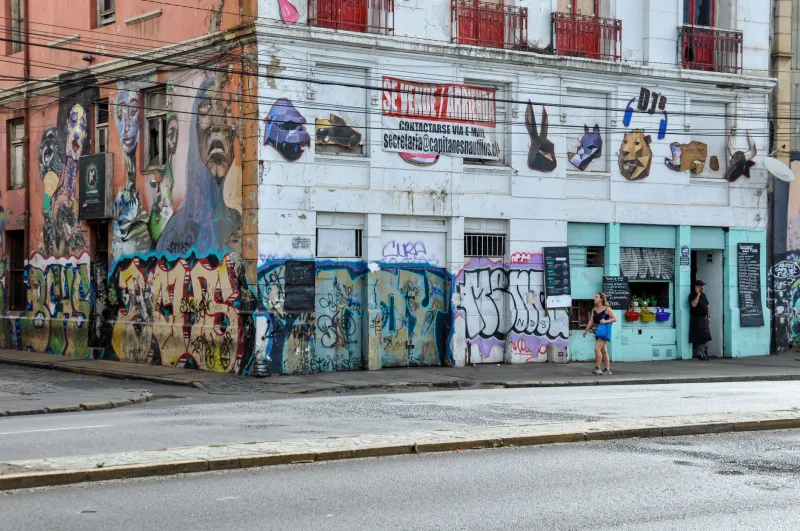
Some walls don't just hold up buildings — they hold up entire communities. Across this country, there are corners where a can of spray paint and a whole lot of nerve turned a blank surface into something that outlasted the artist's name, the neighborhood's struggles, and sometimes even the building itself. These aren't museum pieces. They're alive. They breathe with the block.
Here are ten graffiti murals that stopped being just art and started being landmarks.
1. The Bowery Wall — New York City, NY
If there's a rotating stage for street art in America, it's Houston Street's Bowery Wall on Manhattan's Lower East Side. What started as a blank canvas that drew unauthorized writers eventually became a curated space managed by the Goldman family, who've hosted everyone from Os Gemeos to Shepard Fairey. The wall's history is a mirror of the neighborhood itself — gritty, contested, eventually gentrified, but never boring. Locals treat it like a public gallery opening every time a new piece goes up.
2. Chicano Park — San Diego, CA
This isn't just a mural. It's a declaration of existence. Beneath the freeway overpass in the Barrio Logan neighborhood, more than 80 murals cover the support pillars of the San Diego-Coronado Bridge. The park was born in 1970 when residents physically occupied the land to stop a highway patrol station from being built on it. Artists from the Royal Chicano Air Force transformed the concrete columns into a visual history of Mexican-American identity, struggle, and pride. It's now a National Historic Landmark — which, honestly, feels like the streets finally winning.
3. The Graffiti Wall of Fame — East Harlem, NY
Established in 1980 on the corner of 106th Street and Park Avenue, this wall has been a proving ground for generations of New York writers. Names like SEEN, DAZE, and KEL have left their marks here. The Wall of Fame is less a single mural and more a living document — a place where the history of New York graffiti culture gets written and rewritten in layers of spray paint. For the community, it's a neighborhood institution as reliable as the corner bodega.
4. The Peace Wall — Pittsburgh, PA
Stretching along the North Side near Allegheny Center, Pittsburgh's Peace Wall is one of the longest community-created murals in the country. Started in the 1990s and continuously expanded, it represents a collaboration between professional muralists, graffiti artists, and local residents who each contributed panels. The wall functions as a living neighborhood portrait — changing as the community changes, absorbing new voices while honoring old ones. It's the kind of public art that doesn't feel commissioned. It feels grown.
5. Clarion Alley — San Francisco, CA
Tucked between Mission and Valencia Streets in the Mission District, Clarion Alley has been an open-air gallery since 1992. The Clarion Alley Mural Project, a community-run collective, maintains and evolves the space, which has featured work responding to everything from the AIDS crisis to police violence to the displacement of longtime residents by tech-era gentrification. Walking through it is like reading a decade-by-decade diary of San Francisco's conscience. The art here doesn't decorate — it argues.
6. The Graffiti Bridge — Pensacola, FL
Down in the Florida panhandle, a railroad trestle bridge near 17th Avenue has become one of the most beloved community canvases in the South. Locals have painted it continuously for decades, using the bridge to mark birthdays, memorials, marriage proposals, and neighborhood pride. After a 2017 storm damaged part of it, residents rallied to restore it immediately — which tells you everything about what the bridge means to them. It's not Banksy. It's not famous. It's better than that. It's theirs.
7. Leimert Park Village Murals — Los Angeles, CA
Leimert Park has long been the cultural heart of Black Los Angeles, and its walls reflect that legacy in vivid detail. The murals scattered throughout the village — many executed by artists connected to the World Stage and the broader Afrofuturist and jazz communities — celebrate figures like Sun Ra, Coltrane, and local heroes who never made the history books. These aren't decorative. They're ancestral. Walking through Leimert Park feels like a conversation between the living and the remembered.
8. The Magic City Mural — Birmingham, AL
Birmingham's relationship with public art has been complicated by its history, which makes the explosion of murals in the Avondale and Railroad Park districts feel especially significant. Among them, a sprawling tribute to the city's industrial past and civil rights legacy on First Avenue North has become a landmark for both residents and visitors. Local writers worked alongside commissioned artists to create something that doesn't sanitize Birmingham's story — it sits in it, honestly.
9. Wynwood Walls — Miami, FL
Yes, Wynwood has gotten commercial. Yes, the neighborhood has changed dramatically since developer Tony Goldman invited global street artists to transform its warehouse district starting in 2009. But the walls themselves — featuring work from RETNA, Futura, Os Gemeos, and dozens more — remain genuinely extraordinary. Whatever your feelings about what Wynwood became, the murals represent a moment when a city decided that street art was worth betting the neighborhood on. For better and for complicated, they were right.
10. The Pilsen Murals — Chicago, IL
Chicago's Pilsen neighborhood on the Lower West Side might have the highest concentration of meaningful public murals in the Midwest. Rooted in the Mexican-American community that has defined the neighborhood since the 1960s, the murals here range from traditional Chicano iconography to contemporary graffiti pieces to massive tributes honoring community members lost to gun violence. The walls of Pilsen function as a public memory system — a way of making sure nobody gets forgotten just because they weren't famous.
Why These Walls Matter
What connects all ten of these places isn't fame or Instagram follower counts. It's the way the surrounding community absorbed them — the way people started using them as meeting points, backdrops for quinceañera photos, spots to bring out-of-town visitors, places to grieve and celebrate.
Graffiti has always been about claiming space. About saying I was here in letters big enough that the city can't ignore you. These murals did something beyond that — they made entire neighborhoods say we are here, collectively, permanently, in color.
That's not vandalism. That's infrastructure. The kind that doesn't show up in a city budget but holds a community together all the same.