Fading Fast: The Race to Save America's Oldest Graffiti Before the Wrecking Ball Wins
Fading Fast: The Race to Save America's Oldest Graffiti Before the Wrecking Ball Wins
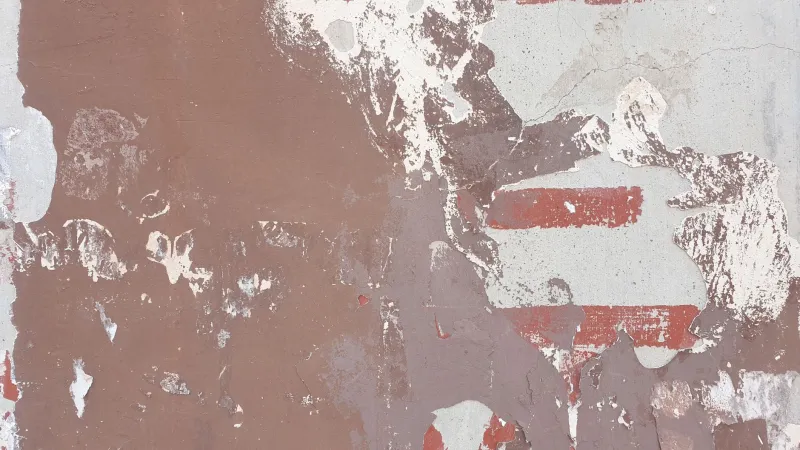
There's a wall in North Philadelphia that's been painted over so many times you'd need a geologist to count the layers. But if you catch it at the right angle — late afternoon, sun dropping low, shadows cutting hard across the brick — you can still make out the ghost of a throw-up from somewhere around 1987. The letters are barely there. More suggestion than statement. But they're there.
For most people walking past, it's nothing. For a small and obsessive community of documentarians, writers, and academics, it's a landmark.
What Makes a Ghost Piece?
In graffiti culture, a "ghost" is what's left when a piece gets buffed, painted over, or just slowly consumed by time and weather. Sometimes it's the shadow of old spray paint bleeding through a fresh coat of latex. Sometimes it's the faint outline of letters pressed into crumbling brick. In really old buildings — factories, rail yards, warehouse districts — you can occasionally find work that predates the whole modern era of hip-hop graffiti entirely. Hobos. Workers. Political slogans from the Depression. All of it technically graffiti, all of it technically illegal once upon a time, and all of it now quietly vanishing.
The people trying to stop that from happening don't have a formal organization or a grant-funded office. What they have is cameras, hard drives, and a shared sense of urgency.
The Documentarians
Take someone like Marcus Webb, a writer out of Detroit who's been photographing ghost pieces across the Midwest for going on twelve years. He started because he kept watching buildings come down and realizing that nobody was recording what was on the walls before the demolition crews showed up.
"The city doesn't care," he says bluntly. "The developers definitely don't care. And by the time anyone thinks to document something, it's rubble."
Webb has catalogued over four hundred individual pieces across Detroit, Cleveland, and Gary, Indiana — cities that have lost enormous amounts of their built environment to disinvestment and demolition. His archive includes photographs, GPS coordinates, estimated dates based on style and context, and in some cases, interviews with writers who actually made the work. He's not affiliated with any museum or university. He just does it because someone has to.
He's not alone. Across the country, a loose and largely informal network of urban explorers and graffiti historians are doing similar work — in the rail yards of Chicago, the waterfront warehouses of Baltimore, the forgotten industrial corridors of Los Angeles. They share their findings in private online groups, at zine fairs, and occasionally at academic conferences where they tend to stick out.
When Academics Started Paying Attention
The scholarly world has been slow to catch up, but it's getting there. A handful of urban historians and American studies professors have started treating old graffiti documentation with the same seriousness they'd apply to any other form of material culture. The argument isn't complicated once you lay it out: if a piece of pottery can tell archaeologists something real about how people lived, why can't a 1979 tag on a Bronx rooftop?
Dr. Yolanda Ferris, who teaches urban cultural history at a mid-sized university in Baltimore, has been making exactly that case for several years. She describes old graffiti as "unauthorized autobiography" — records of who was present in a space, when, and under what circumstances, left by people who had no other platform.
"A lot of urban history is told through official documents," she explains. "Property records. Police reports. City council minutes. Graffiti is the counter-archive. It's what the people who didn't have access to official channels left behind."
Ferris has been collaborating with local documentarians to build a photographic archive of Baltimore ghost pieces, with particular focus on work from the 1970s and early 80s that predates the widespread gentrification of the city's inner harbor neighborhoods. The goal is eventually to get the collection housed somewhere permanent — a library, a historical society, somewhere with actual resources for preservation.
"The challenge," she admits, "is convincing institutions that this is worth keeping. There's still a stigma. People hear 'graffiti archive' and they think we're glorifying vandalism. We're not. We're doing history."
The Clock Is Ticking
The urgency is real and it's accelerating. The same cities where ghost pieces have survived for decades are now in the crosshairs of redevelopment pressures that would've seemed impossible ten or fifteen years ago. Detroit's Corktown. Cleveland's Ohio City. The rail corridors outside downtown Chicago. These are places where old industrial buildings — the ones that tend to carry the most layered graffiti history — are being converted into lofts and breweries and creative office spaces at a pace that would make your head spin.
Sometimes the developers actually want to keep the graffiti. That's its own complicated conversation. A carefully preserved piece on an exposed brick wall in a renovated warehouse is a very different thing from that same piece existing in the wild, untouched, in a building nobody's thought about in thirty years. One is a decorative choice. The other is the real thing.
For the documentarians, the goal isn't necessarily to stop development — most of them are realistic enough to know that's not the fight they're in. It's to get a record down before the walls come down. Photographs. Video. Measurements. Context. Enough that someone, someday, can look back and know what was there.
What Gets Lost When the Walls Go
Here's the thing about ghost pieces that's easy to miss if you're not deep in the culture: they're not just old graffiti. They're evidence of community. Of who claimed space in a neighborhood when nobody else wanted it. Of which crews ran which blocks. Of the aesthetic evolution of an entire art form, visible in real time across a city's physical surface if you know how to read it.
When a building comes down, all of that context goes with it. You can photograph a piece, but you can't photograph the feeling of standing in that specific alley, in that specific city, and understanding exactly what it meant for someone to put their name there. That part is irreplaceable.
Marcus Webb knows this better than most. He's watched enough Detroit blocks get scraped clean to have made his peace with the losses. But he keeps going out with his camera anyway.
"Every one I get is one that exists somewhere," he says. "Even if the wall's gone. It's still real. It still happened."
That's the whole project, really. Making sure it still happened. Making sure somebody knows.
The walls fade. The archive doesn't have to.