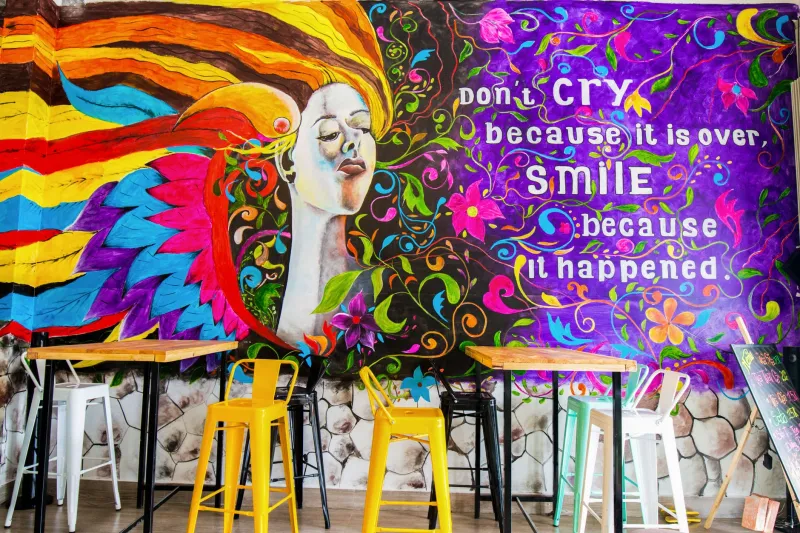
Sacred Pages, Public Stages: How Graffiti Writers Are Taking Their Blackbooks From the Bedroom to the Bookshelf
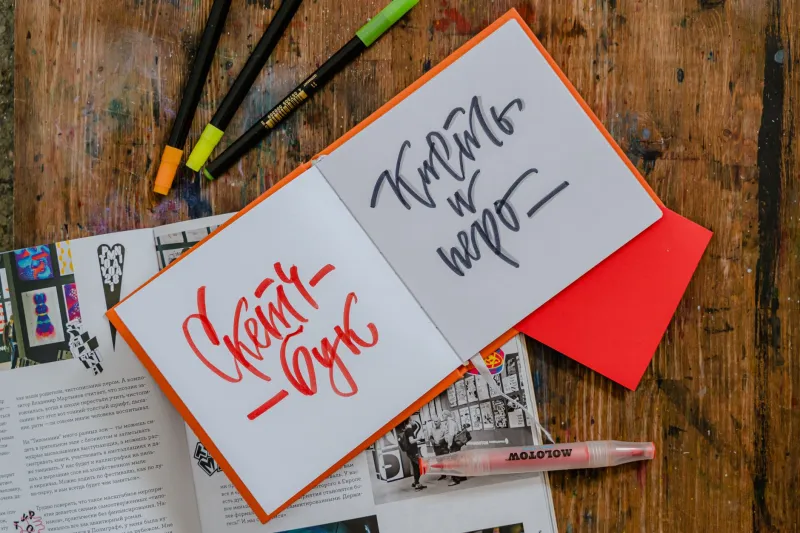
There's a moment every writer knows. You're sixteen, maybe seventeen, sitting on a bedroom floor or hunched over a school desk you're definitely supposed to be using for something else. You've got a black composition notebook — or maybe a hardbound sketchbook if you were feeling fancy — and you're running marker after marker across the page, trying to get your letters to move the way you want them to. That notebook wasn't just practice. It was everything. It was where your style lived before it ever hit a wall.
The blackbook is graffiti's most intimate artifact. Part training ground, part diary, part social contract — writers have been keeping them since the early days of New York subway culture, passing them around crews and trading signatures like currency. To get your name in someone's blackbook was a form of recognition. To fill one yourself was a rite of passage. And for decades, those pages stayed private. That was kind of the whole point.
But something's shifting. A new wave of writers across the US is taking those notebooks public — transforming personal sketchbooks into zines, limited-edition art books, and full-blown coffee table collections. It's a movement that's raising real questions about what happens when the most underground part of an underground culture steps into the light.
The Book Before the Wall
To understand why the blackbook matters, you have to understand what it actually does. For writers, it's where style gets invented. The wall is where you execute — but the blackbook is where you think. Letters get stretched, chopped, layered, and rebuilt from scratch across hundreds of pages before they're ever committed to concrete.
"The blackbook is where you're honest with yourself," says one New York-based writer who's been active since the late '90s. "On the wall, there's pressure. People are watching, the clock is running, your hands are shaking. In the book, it's just you and the page. You can be bad at it. You can try something dumb. That's where real style comes from."
Beyond personal practice, blackbooks have always carried a social dimension. Writers would bring them to spots, to meetups, to parties — and collecting signatures from respected writers was a form of credibility-building that predated Instagram by decades. The pages of a well-traveled blackbook read like a who's-who of a local scene, each tag a timestamp of a specific moment in a writer's journey.
From Private to Print
The leap from personal sketchbook to published book isn't entirely new — a handful of writers have been self-publishing zines since the photocopier era. But the current moment feels different in scale and ambition. Writers are producing beautifully designed, professionally printed collections that sit comfortably alongside gallery art books, and they're finding audiences well beyond the graff community.
Take the explosion of risograph-printed graffiti zines coming out of cities like LA, Chicago, and Philadelphia over the last five years. Small-run, hand-numbered, sold through Instagram or at local art fairs — these publications carry the DIY energy of the culture while presenting blackbook pages with real design intention. Some writers are scanning decades of old sketchbooks and curating them into retrospectives. Others are creating new work specifically for print, treating the book format as its own canvas.
Publishers outside the scene have taken notice too. A number of independent art book imprints have started approaching writers directly, recognizing that graffiti's visual language — its wild typographic invention, its layered color theory, its raw kinetic energy — translates beautifully to the page. The commercial art world spent years trying to bring graffiti into galleries. The smarter move, it turns out, might have been the book all along.
What Gets Lost in Translation
Not everyone in the culture is celebrating. The blackbook's power has always been tied to its privacy, and there's a legitimate tension in making that private thing public.
For one thing, the blackbook exists outside the legal complications that define so much of graffiti's relationship with the mainstream. The wall might be unauthorized. The yard mission might be criminal. But the sketchbook? That's just drawing. It's been a protected space — creatively, legally, emotionally. Turning it into a product changes that relationship in ways that aren't always comfortable.
There's also the question of what gets edited out when a blackbook goes to print. The pages that make it into a published collection are, by definition, the curated ones. The bad sketches, the failed experiments, the embarrassing early work — that's where a lot of the real story lives. A published blackbook is, in some ways, a contradiction in terms: a private practice that's been made presentable for public consumption.
"You're showing people the highlight reel," one Chicago writer puts it bluntly. "The actual blackbook experience is the whole mess. The crossed-out letters. The stuff you did at 2am when you were half-asleep. That's the real thing. The book you sell at an art fair is a different thing."
The Case for Going Public
Still, the writers who have made the leap tend to argue that the trade-offs are worth it — and that publication opens doors the wall never could.
For one, books travel. A mural in Detroit stays in Detroit. A published collection can land in the hands of a kid in rural Mississippi or a design student in Portland who's never seen a freight train in their life. The blackbook-as-book becomes a transmission device for the culture, carrying the aesthetic and the ethos somewhere new.
There's also a preservation argument. Blackbooks get lost, damaged, thrown away. Writers die, scenes dissolve, and with them go decades of visual history. Publication is a form of archiving — a way of saying this mattered, this existed, this was real. Several writers have spoken about the impulse to document not just their own work but the signatures and sketches of writers who are no longer around, treating their published books as something closer to a memorial than a portfolio.
And honestly? Some writers are just tired of graffiti's relationship with invisibility. The culture has given so much to design, typography, fashion, and contemporary art — often without credit, often without compensation. Publishing a book is one way of asserting authorship. Of saying: I made this. Here's my name on the cover.
The Blackbook Isn't Going Anywhere
What's clear, talking to writers across the country, is that the published blackbook hasn't replaced the private one. If anything, the act of putting one notebook out into the world seems to intensify the commitment to keeping the next one close. The practice remains sacred even as the product becomes public.
The blackbook was always the truest part of graffiti — the part that existed before the fame, before the legal drama, before the gallery shows and the streetwear collabs and the think pieces. It was just a writer and a page, working something out.
That it's now finding its way to bookshelves and coffee tables and art fairs feels less like a betrayal and more like an inevitability. The walls have always spoken. Turns out the notebooks had something to say too.