Spray Cans in the Dining Room: What Happens When Hospitality Money Comes Knocking on the Freight Yard Gate
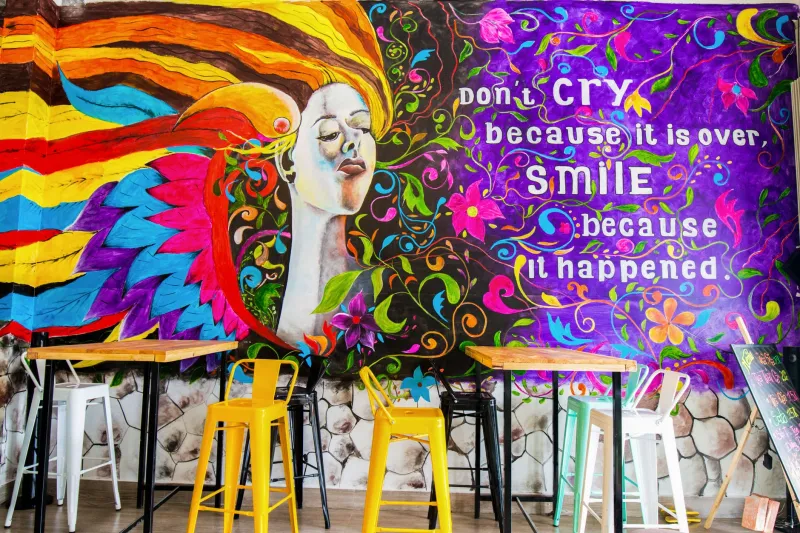
There's a certain irony that doesn't need much unpacking. The writer who spent years dodging transit cops and scrubbing arrest records is now standing in the back dining room of a $200-a-plate restaurant, color-matching his palette to the upholstery. The maître d' is offering him sparkling water. The owner is talking about "brand identity" and "authentic texture." And somewhere in the back of his mind, the writer is doing math — on the check, on what he's agreeing to, and on what he might be trading away to cash it.
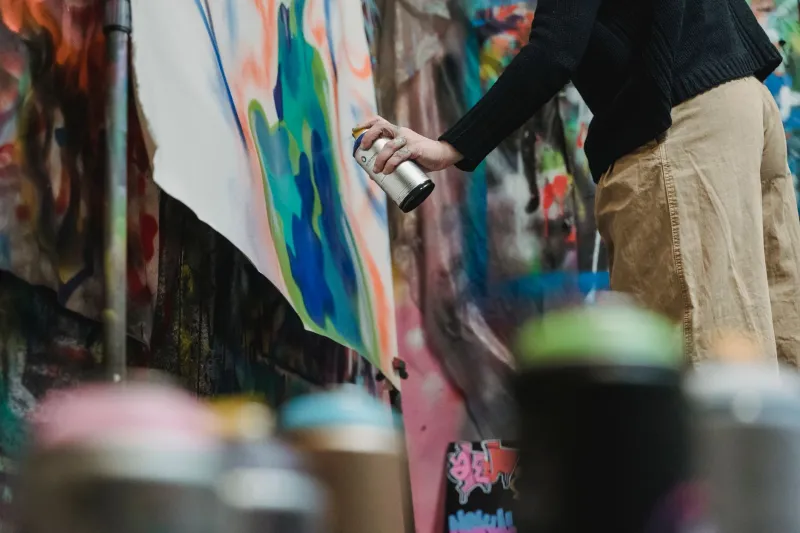
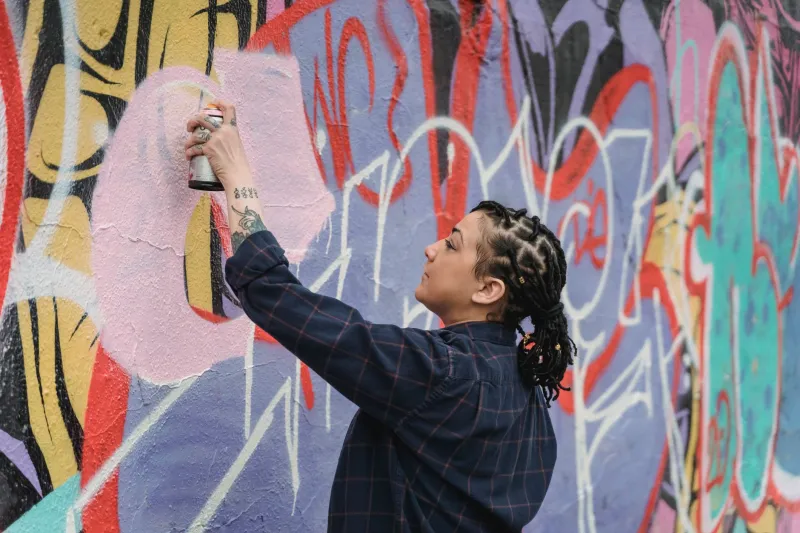
This is the new normal in American hospitality. From Brooklyn to Nashville to the Arts District in Los Angeles, boutique hotels, rooftop bars, and chef-driven restaurants have discovered that graffiti-influenced murals don't just look good — they signal something. Cool. Grit. Realness. The kind of cultural credibility that no interior designer with a Restoration Hardware catalog can manufacture. So they're going straight to the source, commissioning writers with deep roots in the culture to transform their walls into immersive, Instagram-ready environments.
The money is real. The tension is realer.
The Pitch Meeting Nobody Saw Coming
Ask any writer who's been through one of these commission processes and you'll hear a version of the same story. The email comes in — sometimes through Instagram DMs, sometimes through a gallery connection, sometimes through a middleman who describes himself as a "creative consultant." The language is flattering. Words like visionary and raw energy get thrown around. There's talk of creative freedom, exposure, and a budget that would've seemed like science fiction back when the writer was racking paint from hardware stores.
DAZE, a New York-based writer who came up in the 1980s subway era and has since navigated both the gallery world and large-scale public commissions, has talked openly about the evolution of these conversations. The ask has changed. Clients aren't just looking for a mural anymore — they want an experience, a visual story that guests can photograph and post and feel like they've touched something real. "They want the energy without the risk," he's said in various interviews. "Which is kind of the whole point of what we were doing in the first place — risk was the whole thing."
That's the contradiction sitting at the center of every one of these deals. Graffiti's power came from its refusal to ask permission. The walls it lived on weren't offered — they were taken. When a hotel hands over a contract and a color approval process, something fundamental shifts. The question is whether what's left is still worth calling by the same name.
Who's Actually Benefiting Here
Let's be direct: the hospitality industry isn't commissioning graffiti writers out of cultural generosity. They're doing it because it works commercially. A well-executed mural by a writer with credibility drives social media engagement, attracts a demographic that spends money, and costs a fraction of what a traditional art installation might run. The writer gets paid. The restaurant gets a vibe. Everybody wins — or at least, that's the pitch.
The reality is more layered. Writers who take these commissions often face immediate skepticism from within the culture. There's a long-standing and legitimate critique that corporatized graffiti aesthetics strip the art form of its political and social context — the same context that made it meaningful in the first place. When a wall in a gentrifying neighborhood gets a commissioned mural from a writer who grew up in that neighborhood, the mural can simultaneously celebrate the culture and serve as wallpaper for the displacement happening around it.
Some writers are clear-eyed about this. Others are still working it out in real time.
One Los Angeles-based writer — who asked to be identified only by his tag, OMEN — put it plainly in a recent conversation: "I grew up watching my city get tagged, then watched it get cleaned, then watched it get turned into condos with fake tags painted on them by developers who thought it looked cool. Now I'm one of the people getting called to paint those walls. I think about that every time I pick up the phone."
He still takes the commissions. He's also still hitting spots on his own time, on his own terms. For him, the two things coexist — but he's not pretending they're the same thing.
The Sanitization Question
Here's what gets lost in the transaction: context. A throw-up on the side of a building in the South Bronx carries history in its lines — the history of a community that was ignored, burned out, and left to create its own culture from nothing. That same style reproduced on the accent wall of a hotel lobby in Midtown carries... a vibe. A reference. A gesture toward authenticity that is, by its very nature, inauthentic.
This isn't a new debate. The art world has been having versions of it since galleries started showing graffiti in the early 1980s. But the hospitality industry's absorption of the aesthetic feels different in scale and intent. Galleries, whatever their flaws, were at least engaging with the work as art. A restaurant commissioning a mural is primarily thinking about table turnover and Yelp photos.
That said, dismissing every corporate commission as a sellout move is its own kind of oversimplification. Writers are human beings with bills, families, and careers to build. The underground economy of graffiti — racking supplies, dodging fines, hoping your work survives the buff — isn't a sustainable long-term model for most people. If a hotel commission pays for a writer's studio space, their kids' school supplies, or the time to develop work that's entirely their own, that's not nothing.
The more honest framing might be this: the problem isn't that writers take the money. The problem is when the culture pretends the money doesn't change anything.
Drawing Your Own Lines
The writers navigating this space most successfully seem to be the ones who've gotten ruthlessly clear about their own terms. They know which clients to take and which to turn down. They know when a creative brief is actually creative and when it's a straitjacket with a budget attached. They maintain work outside the commission world that keeps them honest — pieces that nobody approved, in places nobody invited them, for reasons that have nothing to do with anyone's quarterly revenue targets.
There's also a growing conversation among writers about using these commissions as leverage rather than endpoints. Getting paid by a hotel doesn't have to mean becoming a hotel's house artist. It can mean building enough financial stability to fund the work that actually matters to you, on your own timeline.
The walls of American cities have always been contested space — politically, aesthetically, economically. Graffiti didn't emerge in a vacuum; it emerged in specific communities, under specific pressures, as a specific kind of refusal. The freight yards and highway underpasses and abandoned buildings that raised a generation of writers weren't chosen for their charm. They were chosen because they were the spaces that were left over, the places nobody else wanted.
Now those spaces — and the aesthetic they produced — are very much wanted. The hospitality industry has figured out that countercultural credibility is a sellable commodity. The writers who built that culture are being asked to help sell it.
Some will. Some won't. Most will land somewhere in the complicated middle, which is, honestly, where most of real life happens anyway.
The walls are still speaking. The question is just who's listening — and who's signing the check.