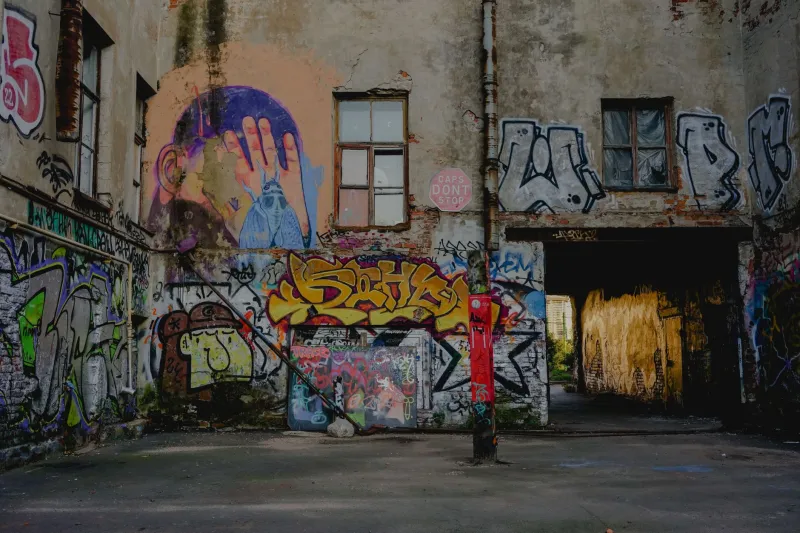
No Bytes on These Bricks: Graffiti Writers Are Drawing a Line in the Paint Over AI Art
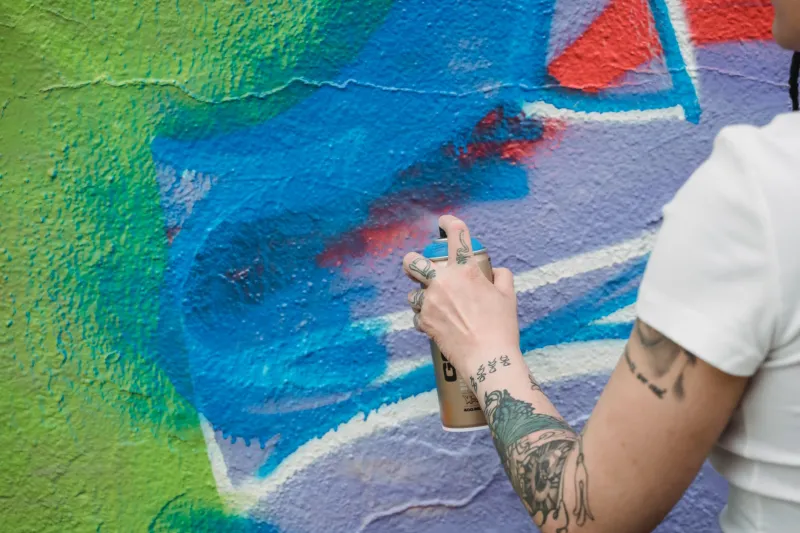
The Machine Learned the Letters. It Didn't Learn the Life.
Somewhere right now, someone is typing a prompt into an AI image generator asking for "wildstyle graffiti tag in the style of New York subway art, high detail, spray paint texture." And within seconds, they're getting something that looks — to an untrained eye — convincingly like the real thing. Clean letters, believable drips, the kind of chromatic depth that takes years to develop with an actual can.
The graffiti community has noticed. And they're pissed.
This isn't just another round of the same old debate about digital art versus traditional media. This is something more specific and more charged — because graffiti was never just about the visual product. It's about what you had to go through to make it. The culture was built on physical risk, geographic knowledge, personal voice, and a set of unwritten codes that no dataset can fully capture. When an algorithm starts producing content that mimics that culture without any of the context, it's not just aesthetically wrong. To many writers, it's a kind of theft.
What Graffiti Actually Is (And What It Isn't)
For people outside the culture, it's easy to reduce graffiti to a visual style. Letters, colors, a certain chaotic energy. But ask anyone who's been writing for more than a minute and they'll tell you the same thing: the style is the least of it.
Graffiti culture — real graffiti culture, the kind that evolved in New York City in the late 1960s and 70s and spread globally through hip-hop — is fundamentally about authorship and presence. Your tag is your name. Your throw-up is your signature on a city that wasn't built for you. The elaborate pieces that take all night to execute in a train yard or on a highway overpass are acts of defiance, community, and personal mythology all at once.
The risk is part of the meaning. Getting up in a spot that's hard to reach, that requires planning and nerve and physical endurance — that's not incidental to the art. It's constitutive of it. When TAKI 183 was running his name all over Manhattan in the early 70s, the point wasn't just that the letters looked good. The point was that he was everywhere, that he existed, that a kid from Washington Heights could leave a mark on a city that barely acknowledged his existence.
No algorithm has ever felt that. No algorithm ever will.
The AI Graffiti Problem, Specifically
So what's actually happening with AI and graffiti aesthetics? A few things, and they're worth breaking down.
First, there are image generators — Midjourney, DALL-E, Stable Diffusion and their various descendants — that have been trained on massive datasets including photographs of graffiti, murals, and street art. These tools can produce images that convincingly mimic established styles: bubble letters, wildstyle complexity, the color gradients associated with specific regional scenes. They can do it on demand, in bulk, for anyone with an internet connection and five minutes.
Second, and more pointedly, there are now tools specifically marketed toward people who want to generate graffiti-style content for commercial use — brand campaigns, merchandise, social media aesthetics — without hiring an actual graffiti artist. This is where the community's frustration sharpens into something more focused. It's not just that AI can mimic the look. It's that the look is being commodified and sold back to a culture that created it, with none of the proceeds — financial or reputational — going to the people who built that visual vocabulary.
Artists like Mear One, a Los Angeles-based muralist with decades in the game, have been vocal about the extractive nature of this dynamic. The argument isn't that technology is inherently bad. It's that this particular application of technology is taking something that has real cultural roots and real human cost attached to it, and flattening it into a product.
Writers Speak
Talk to working street artists across the country and the responses are consistent in their core frustration, even if the specifics vary.
A Brooklyn-based writer who's been active in the New York scene for over fifteen years put it bluntly: "The letters aren't the hard part. Anyone can learn to draw letters. What you can't fake is the ten years of going out, getting chased, getting caught, studying the people who came before you, earning your place in the hierarchy. AI skips all of that and just takes the output. It's like if someone sampled your entire album and called it theirs."
In Chicago, where the graffiti scene has its own deeply specific regional character, a writer who asked to be identified only by her tag described the AI aesthetic problem in terms of cultural lineage: "Every style comes from somewhere. My letters come from people I actually learned from, who learned from people before them. There's a chain of influence that's real and human. AI doesn't have a lineage. It has a training set. That's not the same thing."
In Los Angeles, where Chicano mural traditions and graffiti culture have a particularly deep and intertwined history, the stakes feel even higher. When AI tools generate content that mimics those aesthetics without any understanding of their political and cultural roots, it's not just artistically hollow — it's disrespectful to a tradition that was born from specific experiences of marginalization and resistance.
The Authenticity Question
Here's where things get philosophically interesting, because the graffiti world has always had its own internal debates about authenticity. What counts as "real" graffiti? Is a commissioned mural still street art? Does painting legally make you a sell-out? These conversations have been happening since the culture began.
But AI introduces a different kind of inauthenticity — one that isn't about compromise or commercial co-optation, but about the complete absence of a human author. When a wall speaks, it speaks because someone stood in front of it and made a decision, took a risk, expressed something personal. The wall carries the trace of that person's presence.
An AI-generated image that looks like graffiti carries no such trace. It's a simulation of presence, which is almost the opposite of what graffiti is actually about.
The broader cultural anxiety here mirrors debates happening in music, writing, and visual art across the board. But graffiti's particular claim to authenticity — rooted in physical action, geographic specificity, and countercultural defiance — makes the AI challenge feel especially acute. The culture wasn't built in a studio. It was built in the streets, in the dark, with a backpack full of paint and the constant possibility of consequences.
What Comes Next
The graffiti community isn't going to stop AI from generating images that look like their work. That ship has sailed. But what they can do — and what the best writers are already doing — is double down on everything that makes the real thing irreplaceable.
The physical presence of a mural, the documented history of its creation, the relationship between an artist and a specific neighborhood — these are things that no algorithm can manufacture. And as AI-generated aesthetics flood the internet, the authenticity of work that carries a real human story behind it may actually become more valuable, not less.
The walls have always been a place where the voiceless find a voice. That's not something a machine can replicate, no matter how many images it's trained on. When the streets speak, they speak in the language of lived experience. And that language has no adequate translation in code.