Stitched in the Streets: When Graffiti Writers Started Dressing the Culture They Built
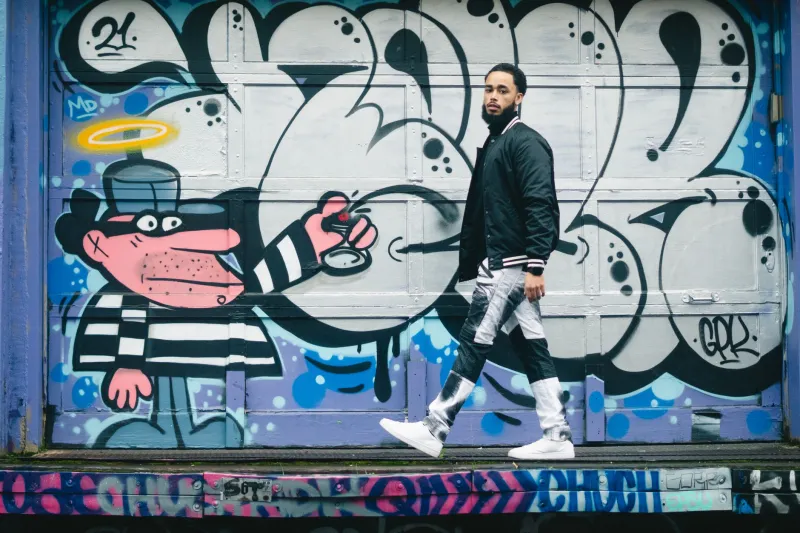
There's a particular kind of handstyle — the ones that look effortless but took years to develop — that you can't fake. The tension in the line, the weight of the stroke, the way color transitions from one shade to the next like a slow exhale. Writers know it when they see it. And increasingly, so does the fashion industry.
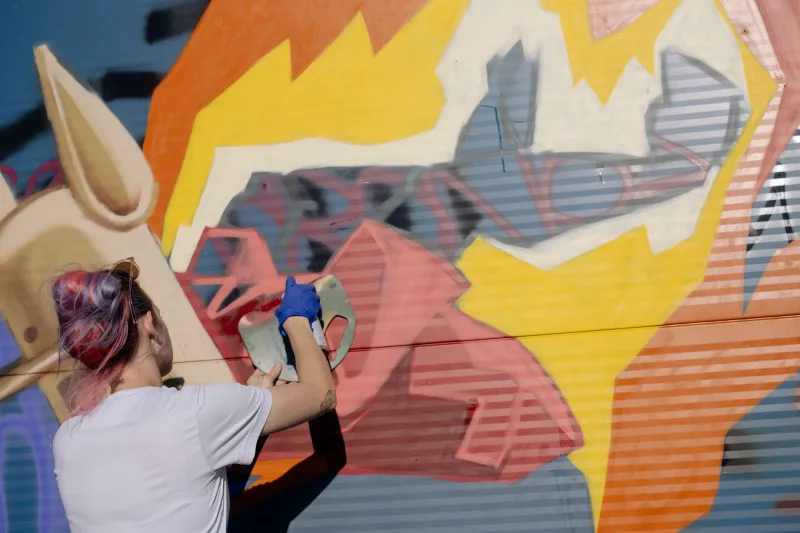
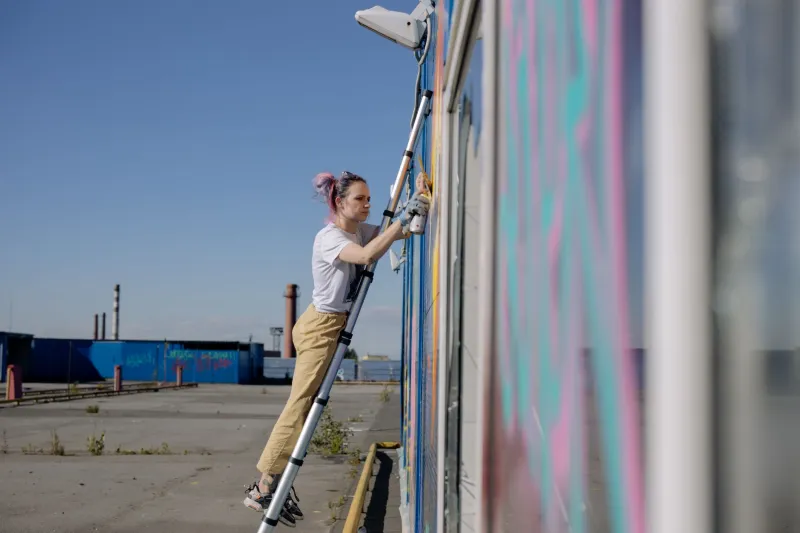
Over the last few years, something real has been happening at the intersection of graffiti culture and American apparel. Not the watered-down version where a fast-fashion brand slaps a spray-paint filter on a hoodie and calls it streetwear. Something more deliberate. More personal. Writers who spent decades mastering their craft on walls, trains, and freight cars are now translating that same visual language into clothing lines, capsule drops, and — yes — the occasional runway moment. And the culture is watching very closely to see who handles it right.
The Canvas Shifted, Not the Commitment
For a lot of writers, the move into fashion didn't feel like a pivot so much as a natural expansion. Dez, a Philadelphia-based writer who's been active since the late '90s, puts it plainly: "The wall was never the only place the art lived. It lived in my blackbook, on my fitted hat, on the custom jacket I painted for my boy before he went to jail. Fabric was always part of it."
That DIY textile tradition runs deep in graffiti culture. Long before any brand came calling, writers were customizing their own gear — painting on denim, stitching patches, airbrushing T-shirts to sell at local spots. The aesthetic was always there. What's changed is the scale, the platforms, and the money involved.
In cities like New York, Los Angeles, Chicago, and Atlanta, a growing number of writers have launched independent clothing brands that are explicitly rooted in their writing identities. These aren't side hustles dressed up as passion projects. Some of them are moving serious units, building loyal customer bases, and doing it entirely outside of the traditional fashion industry pipeline.
Wildstyle to Wearable
The visual translation from wall to garment isn't as simple as it sounds. Wildstyle lettering — those interlocking, arrow-heavy letter forms that defined the New York school — doesn't always read at the scale of a chest print or an embroidered patch. Writers who've made the jump talk about a real learning curve.
Kira, a Los Angeles-based writer and founder of her own independent label, spent nearly two years working with a small production team before she felt like her designs were actually representing her style rather than approximating it. "There's a compression that happens when you go from a 40-foot wall to a 12-inch graphic," she says. "You have to rethink what makes the piece work. The energy has to survive the shrink."
What she landed on was a process that treats each garment almost like a sketch — loose, gestural, built around the rhythm of her lettering rather than a cleaned-up reproduction of it. The result feels genuinely alive in a way that most fashion-adjacent graffiti graphics don't. Her drops sell out fast, almost entirely through word of mouth and her Instagram, with zero retail presence.
Brand Deals and the Authenticity Tax
Not every writer is going the independent route. Some have taken meetings with established American streetwear brands, sportswear companies, and even luxury labels looking to borrow some of that wall credibility. These conversations are complicated, and the writers who've had them are candid about the tradeoffs.
One New York writer — who asked to remain unnamed because he's still in negotiations — described a meeting with a major sportswear label where the creative team spent an hour using the word "authentic" while simultaneously asking him to soften his lettering so it would be "more accessible to a broader consumer." He walked out.
"They want the energy without the edges," he says. "That's not a collaboration. That's a costume."
Other writers have found more equitable arrangements, particularly with smaller American brands that have genuine roots in skate and street culture. The key, most agree, is creative control and transparent credit. A collab where the writer's name is buried in small print on a hangtag while the brand takes the marketing lead isn't a partnership — it's a content extraction.
Who Profits When the Culture Gets Priced
The commodification question is impossible to sidestep. Graffiti built its identity in direct opposition to ownership, permission, and profit. The whole point of bombing a wall or running a train was that nobody could stop you, nobody could buy it, and nobody could put a price tag on it. So what happens when the culture starts retailing for $180 a jacket?
Opinions in the community are genuinely split. Some writers see fashion as a legitimate economic lane — one that lets them build sustainable livelihoods without abandoning their visual identity or chasing gallery approval. Others worry that the moment the culture becomes a product, it starts losing the thing that made it worth anything in the first place.
That tension isn't new. It's the same conversation that's been happening since the first gallery show, the first magazine feature, the first movie deal. What's different now is the speed. Social media has compressed the timeline between underground and overexposed in ways that would've been unthinkable in the '80s or '90s. A writer can go from unknown to brand-partnered in under a year if the algorithm decides to pay attention.
The Fit Check the Streets Are Watching
What's becoming clear is that the writers who are navigating this space most successfully are the ones who treat their fashion work with the same intentionality they bring to their walls. They're not licensing their style to the highest bidder. They're building something — slowly, on their own terms, with their name on every label.
Dez is working on his first full collection, a limited run of workwear-influenced pieces built around the color palette he's used on freight cars for two decades. He's not talking to retailers. He's not pitching to investors. He's doing it the way he's always done his best work — by himself, in the middle of the night, figuring it out as he goes.
"The wall doesn't care if you're ready," he says. "Neither does the market. You just have to commit to the piece."
The streets have always been a runway of sorts — a place where style gets invented, tested, and worn with conviction before anyone else catches on. Graffiti writers have been dressing that stage for fifty years. The fact that the fashion industry is finally paying attention doesn't change who built the look. It just means the rest of the world is finally catching up.