Logging Off the Wall: Why Writers Are Ditching the 'Gram and Going Independent
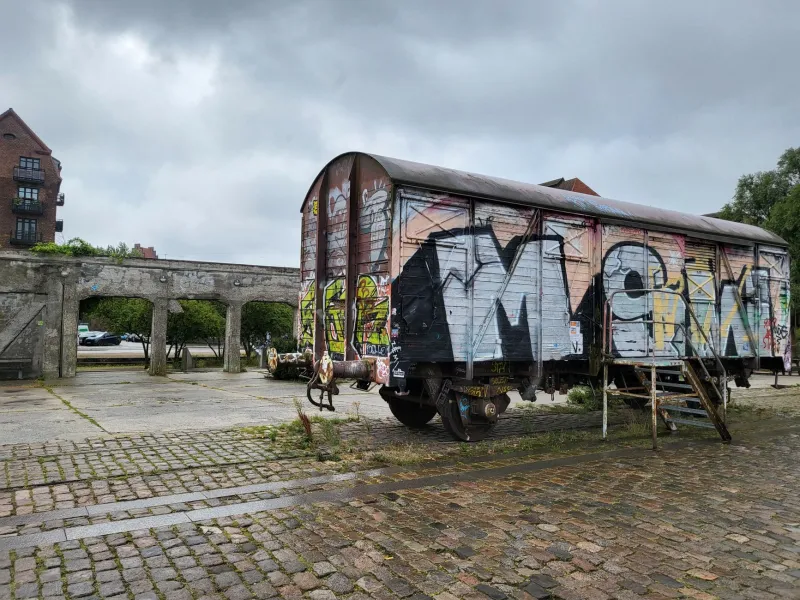
For a brief, genuinely exciting moment, Instagram felt like it was built for graffiti. The square format. The quick scroll. The ability to post a photo of a freight car rolling through Gary, Indiana and have writers in Berlin and São Paulo see it within hours. Before that, documentation lived in VHS tapes, xeroxed zines, and whatever your local crew was willing to share at a jam. The platform felt like liberation.
That was then.
Now a growing segment of the writing community is treating Instagram the same way they treated transit authority property guidelines — as something to route around entirely.
The Platform Took the Culture and Kept the Data
The complaints aren't new, but they've gotten louder. Writers who spent years building audiences on Instagram have watched accounts get shadowbanned, posts removed, and follower counts manipulated by an algorithm that was never designed with graffiti culture in mind. Content moderation systems built to police gang activity have repeatedly flagged graffiti documentation as problematic. Whole archives of work — years of documentation, rare shots, historical record — have disappeared overnight with no appeal process worth the name.
But the frustration runs deeper than technical grievances. The more fundamental issue is what the platform did to the culture itself.
"Instagram turned everything into content," says Chicago-based writer and zine publisher Kael, who shut down his personal account in 2022 and hasn't looked back. "You stop thinking about the wall and start thinking about the photo. You stop thinking about the photo and start thinking about the caption. And then you're a content creator, not a writer. I didn't sign up for that."
The shift he's describing is real and well-documented in creative communities far beyond graffiti. Platform logic — the relentless optimization for engagement, shares, and watch time — has a homogenizing effect on art. What gets amplified is what performs. What performs is usually what's already familiar. Graffiti, at its core, is built on disruption and originality. Those values are structurally incompatible with an algorithm that rewards consistency and accessibility.
The Alternatives Are Scrappier, and That's the Point
What's replacing Instagram in these circles isn't a single platform or a clean technological solution. It's a patchwork of approaches, each reflecting a different set of priorities.
Photo zines have seen a genuine resurgence. Writers and photographers are producing small-run printed books — sometimes just 50 or 100 copies — distributed at jams, left in record stores, or mailed to a list of trusted contacts. They're deliberately hard to find. That difficulty is a feature, not a bug. It filters the audience back toward people who are genuinely invested in the culture rather than casual scrollers looking for aesthetic content.
Independent websites are making a comeback too, and not just as portfolio pages. Some writers are maintaining actual blogs and documentation archives — old-school HTML in spirit if not always in execution — that exist outside the reach of any platform's content policies. You have to know where to look. Again: intentional.
More intriguing are the encrypted and invite-only networks that have started circulating in certain circles. Group chats, private Discord servers, and password-protected archives are functioning as the new spot books — spaces where rare documentation gets shared among people who've earned the access. These aren't marketed. You get in because someone who's already in decides you should be.
Ownership Is the Real Conversation
Underneath all of it is a question about intellectual property and cultural ownership that the graffiti world is grappling with in real time.
When you post your work to Instagram, you retain nominal copyright, but you grant the platform a sweeping license to use, distribute, and display that content however it sees fit. For writers who already exist in a complicated relationship with ownership — their work is often unauthorized, technically illegal, subject to immediate removal — the idea of additionally surrendering their documentation to a corporation adds insult to injury.
"The city can buff my piece," says one New York writer who asked to remain unnamed. "That's always been the deal. But I'm not also handing Meta a license to run ads next to it."
The zine model, by contrast, creates a physical object with inherent scarcity. You can hold it, trade it, lose it, find it in a box years later. It can't be deleted by a server update. It doesn't require a platform to exist. In a culture that has always valued the tangible — the cap on the can, the marker in the pocket, the paint on the wall — there's something philosophically satisfying about documentation that works the same way.
The Tension With Visibility
None of this is without cost. The writers who are opting out of social media are also opting out of the discovery machine that has, for better or worse, introduced graffiti culture to audiences who would never have encountered it otherwise. Some of those audiences have become genuine supporters, collectors, and collaborators.
There's a real tension between the desire to protect the culture from commodification and the recognition that visibility creates opportunity. Younger writers especially are navigating this with more nuance than the binary "log off" narrative suggests. Many maintain minimal social presences while directing their real documentation elsewhere. Some use social platforms explicitly as a loss leader — posting just enough to drive traffic to their independent sites or zine mailing lists.
What's clear is that the era of Instagram as the default archive of graffiti culture is ending, at least among the writers who've been doing this long enough to remember what came before. They built the culture on walls that weren't theirs. They're not about to hand the documentation to a platform that isn't either.