Ghost Mode: How a New Generation of Writers Is Going Deliberately Invisible Online
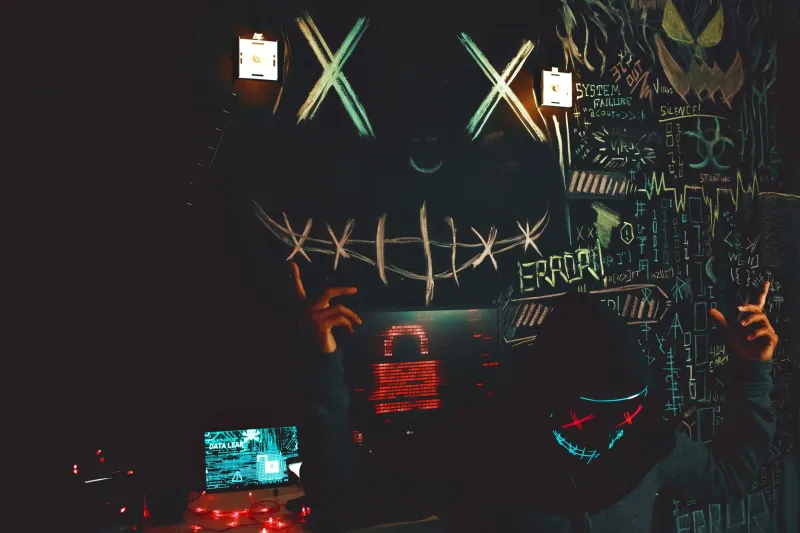
There's a specific kind of irony at play right now in the graffiti world, and it's worth sitting with for a second. At the exact moment when spray-can content is pulling millions of views on TikTok — when algorithm-friendly "satisfying graffiti" videos are making the culture more visible than it's been since Style Wars — a parallel movement of young writers is doing everything possible to make sure you never find them.
Not because they're not active. Because they're very active, and they'd like to keep it that way.
The Visibility Trap
Let's be honest about what the social media moment has done to graffiti's public image. The content that performs — the time-lapses, the clean murals, the "watch me transform this wall" format — is almost universally legal, sanitized, and brand-adjacent. It's graffiti filtered through the aesthetic preferences of people who've never held a can in their lives, optimized for an audience that experiences the culture entirely through a screen.
That's fine, as far as it goes. But it creates a specific problem for writers whose work exists outside those parameters — which is to say, most of the culture's actual underground.
When everything is documented, when every piece gets its own Reel, when writers build followings by essentially live-streaming their process, the line between art and content collapses. And when that line collapses, something else goes with it: the anonymity that has always been graffiti's most essential protective feature.
"The kids who are posting everything are going to figure it out eventually," says a writer in their early twenties from the Pacific Northwest who goes by a tag that, at their request, we're not printing. "Some of them already have. The hard way."
The hard way, in this context, means law enforcement. Social media posts have been used as evidence in graffiti prosecutions in multiple US cities over the past several years. Location data embedded in photos, recognizable clothing, distinctive tag styles captured in the background of someone else's video — the digital trail is longer and more detailed than many young writers initially understand.
The Counter-Movement
What's emerging in response is something that looks, from the outside, almost paradoxical: a generation raised entirely on social media choosing to opt out of it, specifically around their graffiti practice.
This isn't total digital abstinence. These writers are on platforms like everyone else. They consume graffiti content. Some of them have personal accounts entirely disconnected from their writing identity. The separation is deliberate and, among the more serious practitioners, almost religiously maintained.
The actual crew activity — planning sessions, sharing photos of fresh pieces, building the collective visual archive that every crew maintains — happens elsewhere. Private Discord servers are common, with invite-only access and strict norms around what gets shared and with whom. Encrypted messaging apps handle coordination. Some crews maintain entirely separate, compartmentalized digital identities for their writing lives, using devices that never touch their personal accounts.
"It's not paranoia," says one writer from the Midwest who asked to remain completely unidentified. "It's just understanding how the internet actually works. Your information isn't private because you want it to be. It's private because you make it be."
Coded Language and the New Underground
Beyond operational security, something more cultural is happening. The coded language that has always existed in graffiti — the in-group terminology, the references legible only to those already inside — is being deliberately extended and elaborated as a way of maintaining cultural distance from the mainstream audience that's suddenly paying attention.
New slang emerges and gets deliberately kept out of the content that reaches broader audiences. Crew names are constructed to be unsearchable. Spots are referenced by internal nicknames rather than actual locations. It's an entire parallel vocabulary designed to function as a filter — letting the right people in while keeping the algorithm's indexing fingers out.
This isn't entirely new; graffiti has always had its own language. What's new is the self-consciousness of it, the awareness that visibility is a threat that needs to be actively managed in the digital age.
The Irony Runs Deep
Here's where it gets genuinely interesting from a cultural standpoint: some of the most technically accomplished young writers in America right now are essentially invisible to the broader graffiti community that exists online. Their best work gets documented within their crew, shared in closed channels, and experienced almost exclusively by people who encounter it in person — on walls, on trains, in the spots where graffiti has always lived.
In a weird way, that's a more authentic relationship to the culture than anything happening on TikTok. The piece exists for the wall. The photo exists for the crew. The reputation travels through networks of actual human beings who've earned the access.
Meanwhile, the public-facing graffiti content ecosystem grows larger and more divorced from the underground it claims to represent. The gap between what's visible online and what's actually happening on the streets widens every year.
What This Means for the Culture
I'll be direct here: I think the ghost-mode movement is one of the healthiest things happening in graffiti right now. Not because visibility is inherently bad — this site exists, after all, because we believe the culture deserves to be seen and celebrated. But because a culture that loses its underground loses its engine.
Graffiti's energy has always come from the tension between exposure and concealment, between the desire to be seen and the necessity of invisibility. The sanitized, algorithm-friendly version of the culture that dominates social media isn't graffiti. It's content that looks like graffiti. The real thing is still happening in the dark, and the writers doing it are getting smarter about keeping it there.
The walls will always know. The algorithm doesn't need to.
The kids going ghost aren't abandoning the culture. They're protecting it from the thing that's trying to swallow it whole — and they're doing it with more sophistication than most adults in this space have given them credit for. Watch the walls, not the feeds. That's where the story is actually being written.