Can't Cap It: What Paint Companies Still Don't Understand About the Writers Using Their Product
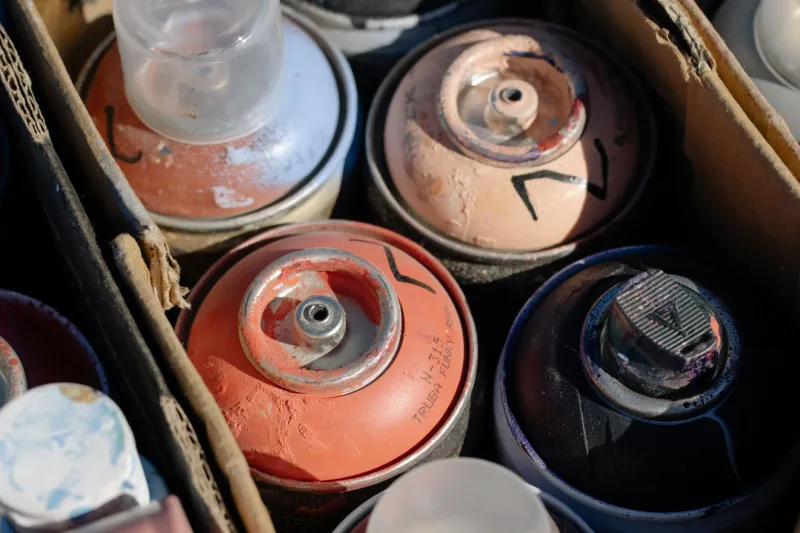
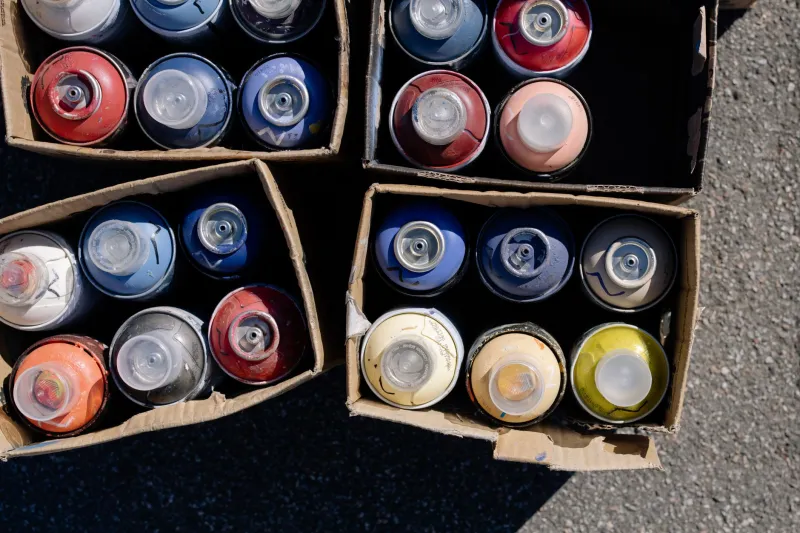
Every writer has a story about paint that let them down. The can that sputtered halfway through a fill. The color that dried three shades darker than the sample chip suggested. The cap that clogged in cold weather and blew out in heat. The formula that looked brilliant on the wall for two weeks and then started ghosting like it was never there.
Spray paint is the writer's most fundamental tool, and the relationship between writers and paint manufacturers is one of the most underexamined dynamics in the entire culture. It's also, increasingly, one of the most consequential — because the writers who've been stress-testing aerosol in real-world conditions for decades have quietly become the most valuable unpaid R&D department in the paint industry.
The Gap Between the Lab and the Wall
Paint engineers work in controlled environments. They test adhesion on standardized surfaces, measure viscosity under regulated temperatures, and evaluate color accuracy against industry standards. What they don't test — can't really test, in any meaningful way — is what happens when a writer is working fast, in January, on a rough concrete surface with variable texture, under ambient lighting that shifts every twenty minutes.
"The lab conditions and the field conditions are completely different," says Daniel, a paint engineer at a major aerosol manufacturer who agreed to speak on background. "We can get very close to what the product needs to do. But the edge cases — the extreme temperature ranges, the surface variability, the layering sequences writers use — those are hard to replicate."
Hard to replicate, but not hard to observe. Writers have been observing them for years, developing a granular, empirical knowledge of aerosol behavior that most engineers would find impressive if they ever actually sat down to listen.
Most don't.
The Cap Problem Is Bigger Than You Think
If you ask writers what single aspect of spray paint technology frustrates them most, caps come up almost immediately. The cap — the nozzle that controls spray pattern, pressure, and flow — is the interface between the can and the wall. It determines line width, edge definition, and the tactile experience of actually painting. And writers will tell you, with remarkable consistency, that cap design still hasn't caught up to what they actually need.
"Fat caps, skinny caps, the German imports, the domestics — they all have their thing," says Renée, a writer based in Houston who's been painting for twelve years. "But there's no cap that does everything right. You're always trading off. Wide spray but bad edge definition. Good edge but the flow is inconsistent. It's like the people designing these things have never watched someone actually paint a letter."
The aftermarket cap economy — where writers import nozzles from European manufacturers, swap caps between brands, and develop strong preferences for specific models — is itself evidence of the gap. If the paint companies were getting it right, there wouldn't be a thriving secondary market built around correcting their products.
Fade, Bleed, and the Color Accuracy Problem
Color is where the frustration gets most pointed. Writers who work with color in serious ways — productions, murals, detailed pieces — will tell you that the relationship between the color on the label and the color on the wall is more of a suggestion than a guarantee.
Surface absorption, primer choice, ambient humidity, UV exposure — all of these variables affect how a color lands and how long it holds. Writers have developed elaborate workarounds: testing colors on scrap material before committing to a wall, layering in specific sequences to control bleed, using particular brands for backgrounds versus detail work.
What they're doing, essentially, is compensating for the fact that manufacturers aren't designing for their use case.
"I've had colors from the same batch look different on the same wall," says Kev, a Philadelphia-based writer who does large-scale commissions. "That's a consistency problem. In any other industry, that would be unacceptable. In spray paint, you just kind of accept it because there's no alternative."
There's movement on this front, slowly. A handful of paint companies — mostly European, with Montana and Molotow being the most cited — have developed closer relationships with working writers as part of their product development process. The results are visible in the quality gap between those brands and the mass-market alternatives.
Underground Demand Shaping the Market
Here's the part that doesn't get enough attention: the graffiti market, despite being legally complicated and culturally misunderstood, has real purchasing power. Writers are loyal customers who buy in volume, develop strong brand preferences, and influence each other's purchasing decisions through a word-of-mouth network that operates faster than any marketing campaign.
Manufacturers who've figured this out — really figured it out, not just slapped some graffiti imagery on their packaging — have benefited significantly. The brands that writers actually trust have earned that trust through product performance, not advertising.
"When a writer tells their crew that a certain can is the move right now, that's worth more than any sponsored post," says Marcus, who runs a paint supply operation out of Chicago. "That recommendation travels. It influences what people are buying across multiple cities."
The irony is that the culture doing the most rigorous real-world testing of these products has historically had the least formal input into how they're developed. That's starting to change — but slowly, and mostly driven by European manufacturers who seem to take the writer market more seriously than their American counterparts.
What Writers Actually Want
It's not complicated. Consistent color across batches. Caps that maintain flow in cold weather without blowing out in heat. Formulas that bond properly to a wider range of surfaces without requiring elaborate prep work. UV resistance that actually holds past a few months of sun exposure.
And communication. Writers want to be consulted, not just observed. The knowledge that exists in the culture — the accumulated field experience of thousands of painters working across every surface and climate condition in the country — is genuinely valuable. Treating it as such would benefit everyone.
The wall doesn't care what the lab results say. The writer knows what works. The gap between those two facts is where better paint gets made.