Under the Radar and Overbooked: Inside Graffiti's Thriving Shadow Economy
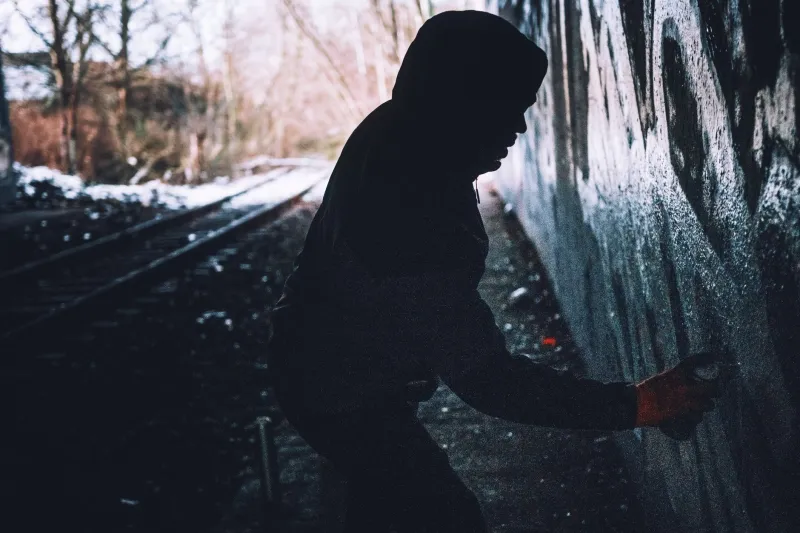
Somewhere in a gated community outside Scottsdale, there's a garage door that a tech executive paid $18,000 to have painted. He can't tell his neighbors who did it. He can't post it on LinkedIn. He definitely can't hang a placard next to it with the artist's name and a QR code linking to a bio. That's the whole point.
Welcome to the part of the graffiti economy that nobody talks about — at least not loudly — where elite writers are quietly pulling in serious money from clients who want the real thing, not a sanitized mural commission approved by a city arts board.
The Clients Nobody's Naming
The demand is more widespread than most people realize. Wealthy collectors, Silicon Valley founders, real estate developers, and even a few Fortune 500 companies have quietly sought out writers to work on private properties, custom vehicles, yacht interiors, and corporate campuses they want to feel edgy without the liability of anything traceable.
One writer operating out of the Pacific Northwest — who asked to be identified only as Servo — described getting a call through a mutual contact from a tech mogul who wanted his private warehouse "hit properly, not like a mural, like it was actually done." The distinction matters enormously in this world. Clients aren't paying for something that looks like graffiti. They're paying for the authentic cultural artifact, the thing that can't be replicated by a muralist who learned lettering on YouTube.
"They want the energy," Servo said. "They want to feel like they own something that was never supposed to be owned."
The going rate for that feeling? It varies wildly, but writers who spoke to Wonderful Graffiti described project fees ranging from $5,000 for a single vehicle to upward of $80,000 for large private installations. A few described annual earnings well into six figures from commissioned work alone, none of it reported, none of it tracked.
How the Gray Market Actually Works
The mechanics of this underground economy are more organized than you'd expect. Most transactions happen through layers of intermediaries — fixers, mutual connections, sometimes even former gallery assistants who know both worlds. Payment is almost always cash, sometimes crypto. Contracts don't exist. What does exist is reputation.
In a market built entirely on word of mouth and trust, a writer who does sloppy work or talks too much doesn't get a second call. The discretion is baked into the culture. Writers who came up tagging trains and dodging transit cops already know how to keep things quiet. That skill set, it turns out, is worth money in more ways than one.
A Los Angeles-based writer who goes by Dregs explained the vetting process as almost comically thorough. "You're not just getting hired for your hand style. You're getting hired because someone vouched that you won't be posting about it, you won't be running your mouth at a panel, you won't be putting the client's address in a documentary."
Some writers have built what amount to full client rosters this way — a rotation of repeat customers who come back every time they acquire a new property or want something refreshed. It functions less like freelance work and more like having a retainer.
Why Writers Choose the Shadow Over the Spotlight
The obvious question is why writers with this level of skill and demand don't just go fully legitimate. The gallery world is more open to graffiti-rooted artists than it's ever been. Legal mural commissions are everywhere. Brand deals exist.
The answers are complicated and personal, but a few themes kept surfacing in conversations.
For some, it's about control. The moment you sign a contract with a corporation or a city arts department, you inherit their restrictions, their approval processes, their brand guidelines. The shadow market offers something rare in the creative economy: total creative autonomy paired with serious pay.
For others, it's ideological. Entering the legitimate art market feels like surrendering something that was never supposed to be a commodity in the first place. The illegality isn't incidental — it's the point. The risk, the secrecy, the fact that it exists outside systems of permission and ownership, that's the culture.
"The second I start doing things legally, I'm not doing graffiti anymore," said one East Coast writer who declined to be identified. "I'm doing decoration. And decoration doesn't pay what I make."
The Risks That Don't Go Away
None of this comes without exposure. Writers operating in this space are still technically committing vandalism in many cases, even on private property, depending on local ordinances and whether the work crosses onto visible public-facing surfaces. The tax implications of unreported income are real. And the informal nature of these arrangements means there's no legal recourse if a client refuses to pay or — worse — decides to report a writer after the fact.
Several writers described situations where they felt the terms shifted mid-project, where clients got cold feet or tried to renegotiate payment after the work was done. Without a contract, the leverage disappears. The only protection is reputation, and the threat that word travels fast in small circles.
Still, for the writers who have found footing in this market, the calculus seems to work. They're not chasing clout. They're not building a brand for a future merch drop. They're doing exactly what they've always done — painting on their own terms — and getting paid in a way that keeps them entirely off the grid.
In a culture that was built on defying the rules of who gets to make art and where, maybe that's the most authentic outcome of all.